
49 Lenders Are Now Offering Rates Below 6%: What It Actually Means for Your Home Loan
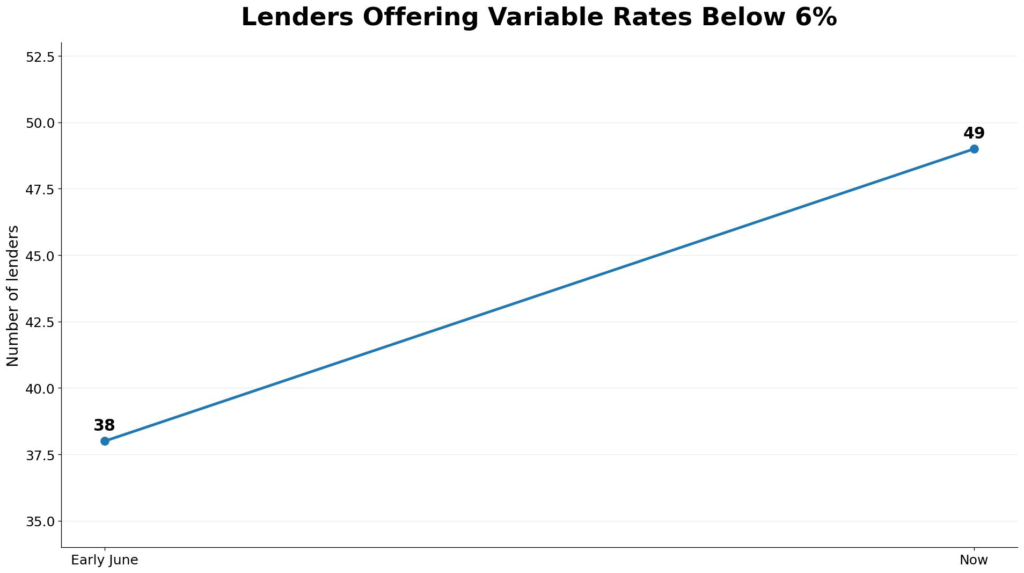
Home loan competition is heating up, with 49 lenders now offering at least one variable home loan rate below 6%, up from 38 at the start of June. At the same time, 31 lenders have cut their new-customer variable rates since the beginning of June.
These are two different measures, but together they show how strongly lenders are competing for new mortgage customers.
For borrowers, that competition could create an opportunity to negotiate a better deal, review their current loan or consider whether refinancing makes sense.
Why Are So Many Lenders Cutting Rates?
Put simply, lenders are competing harder for new mortgage customers.
Rate tracking shows that 31 lenders have reduced their new-customer variable rates since the beginning of June, including a number of challenger and non-bank lenders. While the major banks have generally been slower to make broad-based cuts, competition across the wider lending market is increasing.
Lenders know borrowers have more choice and are increasingly willing to compare their options. Sharper rates are one way lenders are trying to win new business.
For borrowers, that’s potentially good news.
More competition can mean more negotiating power, but only if you take the time to review what’s actually available
The Catch: The Sharpest Rates Are Often Targeted at New Customers
This is where existing borrowers need to pay attention.
Many of the recent rate reductions have been aimed at new customers. If you’ve had your home loan for several years and haven’t reviewed your interest rate, there’s a chance your current rate is no longer as competitive as it could be.
And even a relatively small difference in interest rate can add up over time.
For example, Canstar estimates that a borrower with a $600,000 loan and 25 years remaining could save around $10,592 over two years by moving from a 6.97% rate to a 5.99% rate, after allowing for estimated switching costs. Actual savings will vary depending on the borrower’s circumstances, loan structure and fees.
That’s why a regular home loan review can be worthwhile.
Your lender may not automatically tell you that a more competitive option is available elsewhere. Sometimes you need to ask or have your loan reviewed on your behalf.
But Don’t Just Chase the Lowest Rate
A rate below 6% might look attractive, but the lowest advertised rate isn’t necessarily the best loan for every borrower.
Before changing lenders, it’s important to consider the bigger picture, including:
- Your current interest rate and loan balance
- Loan-to-value ratio (LVR)
- Loan features such as an offset account or redraw
- Annual and ongoing fees
- Fixed or variable rate options
- Repayment structure
- Your current financial position and future plans
- The lender’s credit and servicing policies
- Any costs associated with refinancing
A slightly lower rate may not provide a genuine saving if the new loan comes with higher fees or doesn’t provide the features you actually need.
What This Means for You as a Borrower
If you haven’t reviewed your home loan recently, now could be a good time to check where you stand.
You don’t necessarily need to refinance immediately. A good starting point is to:
1. Check your current interest rate
Know what you’re actually paying today and compare it with the rates available for your circumstances.
2. Ask your current lender for a better deal
Your existing lender may be willing to offer a more competitive rate to retain your business.
3. Compare the wider market
If your current lender can’t offer a competitive option, it may be worth comparing other lenders taking into account both the rate and the overall cost of the loan.
4. Calculate the real benefit
If refinancing is being considered, look at the potential interest savings after factoring in application, valuation, discharge and other switching costs.
Does This Mean You Should Refinance?
Not necessarily.
Refinancing makes sense when the overall benefit outweighs the cost and the new loan better suits your circumstances.
For some borrowers, the best outcome may simply be negotiating a better rate with their existing lender. For others, switching lenders could provide a meaningful saving or give them access to features that better suit their needs.
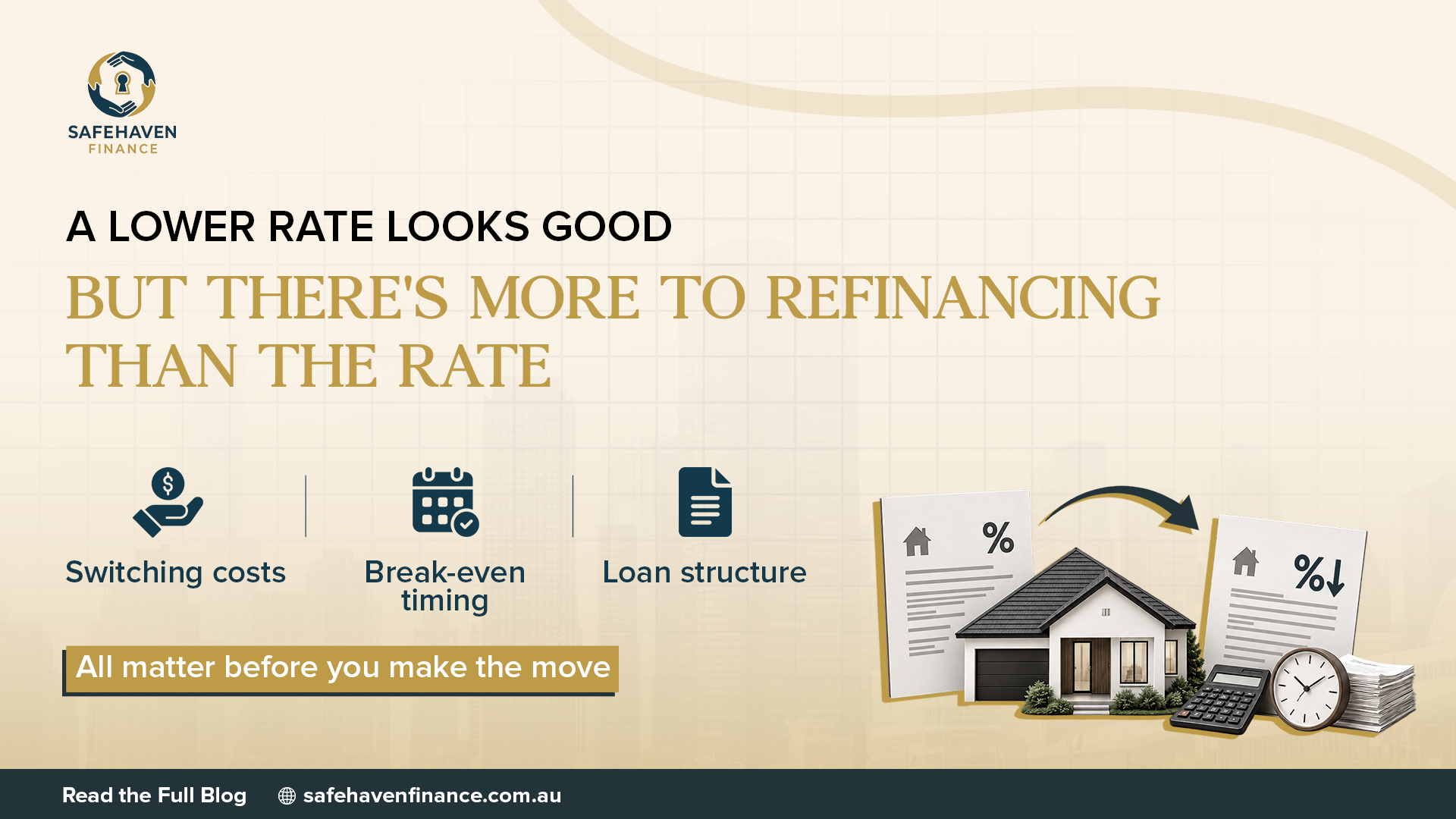
The key is to compare the whole loan, rather than focusing only on the headline interest rate.
The Bottom Line
With 49 lenders now offering at least one variable rate below 6% and 31 lenders cutting new-customer rates since June, competition in the mortgage market is clearly increasing.
That’s an opportunity for borrowers particularly those who haven’t reviewed their home loan for some time.
You don’t need to wait for your lender to contact you. A simple rate and loan review could identify whether you’re already on a competitive deal or whether there may be a better option available.
The right home loan isn’t necessarily the one with the lowest advertised rate. It’s the one that offers the right combination of rate, fees, features and flexibility for your circumstances.
Where Safe Haven Finance Fits In
At Safe Haven Finance, we work across more than 50 lenders, so when the market shifts like this, we can see exactly where the genuine opportunities sit for each client.
Ready to make your move? For tailored advice or to discuss your refinancing strategy, contact Safe Haven Finance. Call us on +61 433 564 936 or book a free consultation today. We’re here to help you cut through the noise and secure a loan that actually works for you.
Follow Safe Haven Finance on Instagram and LinkedIn for more updates on the Australian lending market.