
Australian Property Market Cooling in 2026: What Borrowers Need to Know
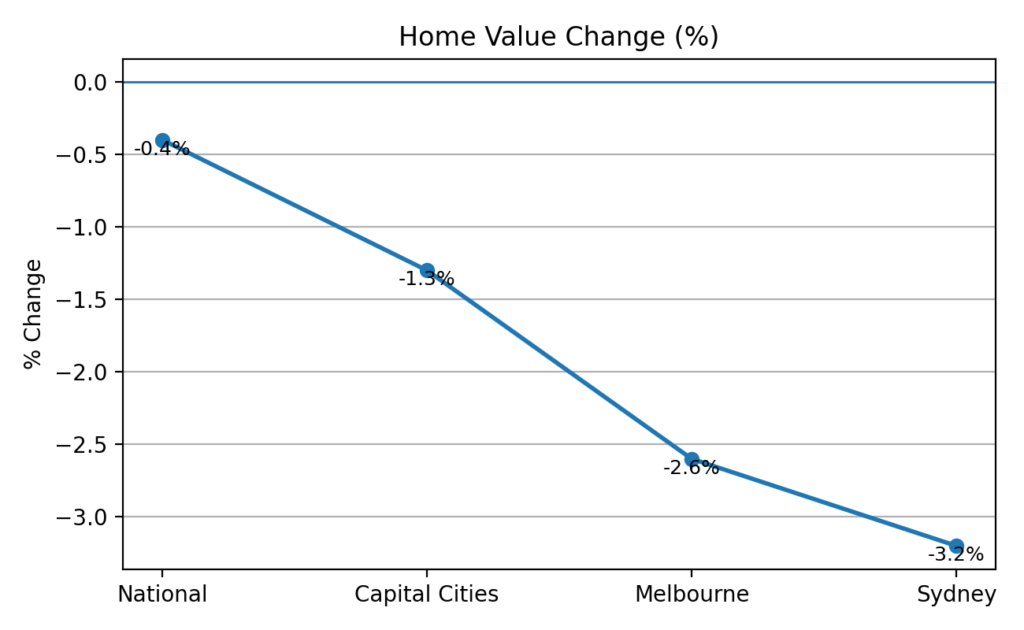
After several years of strong property price growth, Australia’s housing market is entering a different phase. Buyers are becoming more cautious, price growth has slowed, and borrowing capacity has become a bigger factor in purchasing decisions. According to Cotality’s Home Value Index, national home values fell 0.4% in June, the biggest monthly drop since December 2022. Capital city values were down 1.3% over the quarter, with Sydney leading the fall at 3.2% and Melbourne close behind at 2.6%. Meanwhile, Perth, Adelaide and Brisbane are still ticking along in positive territory, just at a slower pace than last year.
These numbers actually mean on the ground: fewer buyers at auctions, clearance rates stuck below 50%, and capital city sales down 16.2% compared to a year ago. It’s not a crash. It’s a market catching its breath.
Why Borrowing Power Has Shrunk
The bigger story for most of our clients isn’t the property values; it’s what’s happened to their borrowing capacity. Changes in interest rates and lender assessment policies have reduced borrowing capacity for many buyers compared with previous years. For borrowers with larger mortgages, even modest rate increases can translate into hundreds of dollars extra per month in repayments.
That’s real money coming out of household budgets every single month, and it’s exactly why getting your numbers checked before you go house hunting matters more now than it has in years.
“Why Borrowing Capacity Matters More Than Property Prices”
Many buyers focus on whether prices are rising or falling, but the bigger question is whether the loan structure still works for their circumstances.
Lenders assess borrowing power based on income, expenses, liabilities, interest rates and buffers. Two buyers looking at the same property may have very different borrowing outcomes depending on their financial position.
What This Means If You’re First Home Buyers, Existing Homeowners, Property Investors
A softer market isn’t bad news for everyone. Undersupply is still the story underneath all of this, and that keeps long-term demand solid even while short-term prices wobble. For buyers with their finances in order, a correction can actually open doors that were shut during the boom.
Here’s what we’d suggest thinking about right now:
- Know your number first. Understand your real borrowing power before you start inspecting homes, not after you’ve fallen in love with one.
- Stress-test your current loan. If repayments have crept up since the last rate rises, it’s worth reviewing whether your loan still suits you.
- Build a buffer. A bit of breathing room in your budget goes a long way when conditions are uncertain.
- Get pre-approved. Softer markets often bring better opportunities, and pre-approval means you can move when they show up.
- First home buyers, softer conditions can work in your favour, but only if your finance is sorted early.
- Investors, this is the time to structure loans around cash flow that can hold up, not just today’s numbers.
Turning A Correction Into A Plan
Markets move in cycles, and corrections don’t last forever. The buyers who come out ahead are usually the ones who used the quieter period to get their finances sorted, not the ones who waited on the sidelines.
Ready to make your move? For tailored advice or to talk through your buying strategy, get in touch with the team at Safe Haven Finance. Book a free consultation with us and feel free to call us at 0433 564 936.
Follow us on Instagram and LinkedIn for more updates on the Australian property and lending market.