Asset and Equipment Finance for Tradies: A Practical Guide
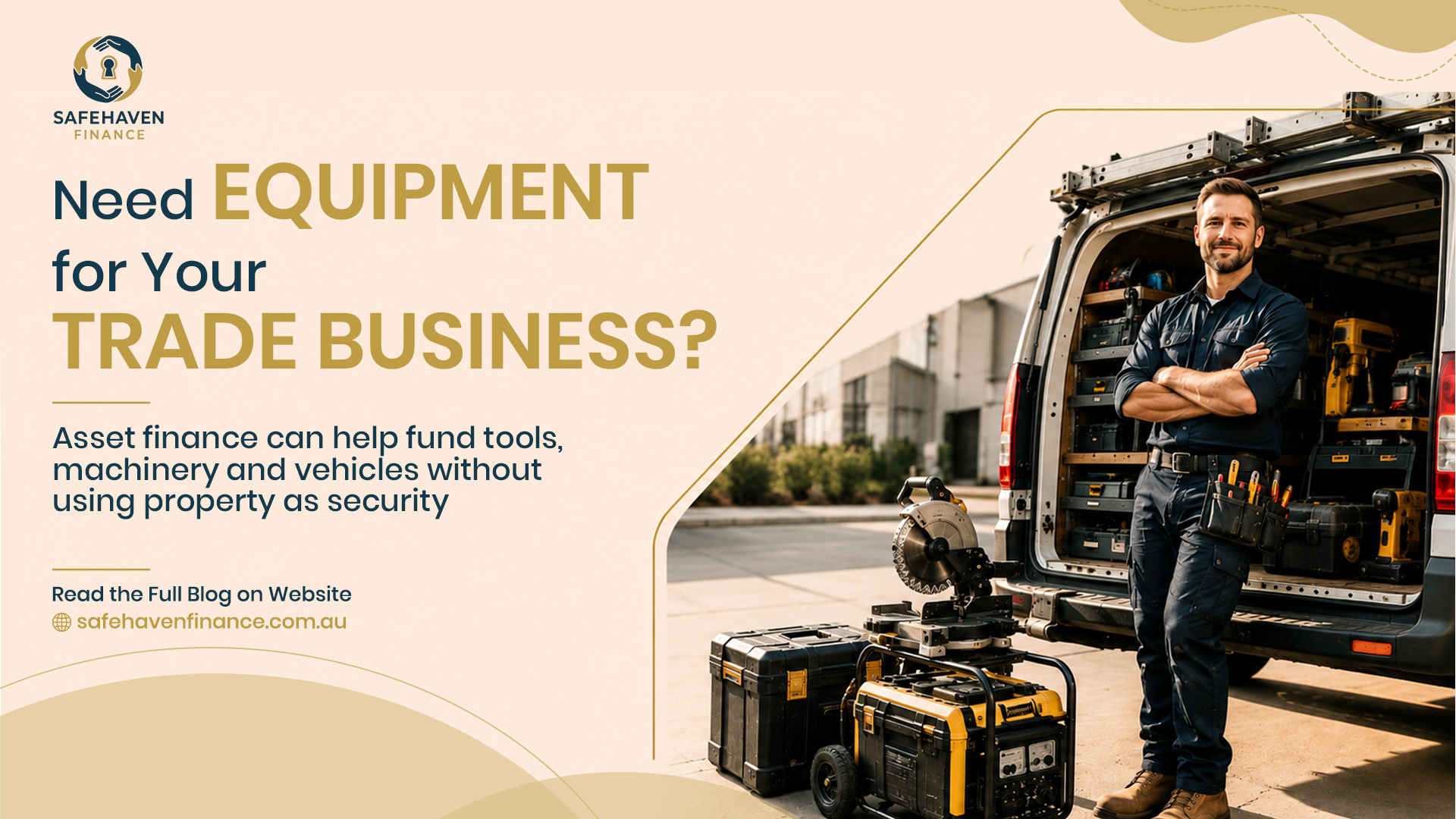
You know the job. You have the contracts. The thing stopping you is the ute that keeps breaking down, the excavator you’re hiring because you can’t justify buying, or the tools you need to take on the next tier of work. Asset finance for tradies Australia is built specifically for this gap, and the way it works is simpler than most people expect.
In many asset finance arrangements, the asset itself is used as security, so real property security may not be required, subject to lender policy. For some lower-value deals, certain lenders may consider simplified or low-doc applications using ABN details, identification and an asset quote, but approval still depends on trading history, credit profile, asset type and lender policy.
What Rates Look Like Right Now
The RBA cash rate reached 4.35% after the February, March and May 2026 rate increases and remained at that level in June. Equipment finance rates Australia-wide continue to vary significantly by lender, asset type, credit profile, trading history and whether the equipment is new or used.
Public rate guides indicate that equipment finance rates vary between lenders depending on the borrower profile, loan structure and asset being financed. Final pricing should always be confirmed with the lender at the time of application.
The difference between the floor and the ceiling is mostly three things: how long you have been trading, whether the asset is new or used, and which lender actually sees your file. Equipment finance rates can vary meaningfully between lenders on the same transaction, especially when the asset age, ABN history, deposit, balloon and credit profile are different.
Also Read: Auction Clearance Rate Hits 6-Year Low: What Buyers Should Know
The Three Structures Most Tradies Use
The right structure follows the asset and where you want the tax to land, not which one quotes lowest. Here is the practical read:
| Finance structure | Ownership | GST / tax treatment | Best suited for |
| Chattel mortgage | A business usually owns the asset from the start; the lender holds security | GST credits, interest and depreciation may be claimable depending on business use and tax advice | Tradies buying utes, vans, machinery or tools they plan to keep |
| Finance lease | The lender owns the asset during the lease | Lease payments may be deductible, subject to tax advice | Tradies who upgrade equipment regularly |
| Hire purchase | Ownership usually transfers after final payment | Interest and depreciation may be claimable depending on structure | Tradies who want ownership at the end of the term |
The main difference is ownership and tax treatment. A chattel mortgage usually suits tradies who want to own the ute, van, machinery or tools from the start. A finance lease may suit businesses that upgrade equipment regularly. Hire purchase can work for tradies who want ownership at the end of the term. The right structure depends on cash flow, GST position, asset type and accountant advice.
The Proposed Instant Asset Write-Off Changes from 1 July 2026
The 2026–27 Federal Budget announced that the instant asset write-off would be made permanent at $20,000 per eligible asset from 1 July 2026 for small businesses with turnover under $10 million. The ATO also notes the measure is announced but not yet law, so business owners should confirm the current position before relying on it.
What this means practically is that, if the proposed measure becomes law, eligible small businesses purchasing qualifying assets through structures such as a chattel mortgage or hire purchase may be able to claim an immediate deduction, subject to the applicable tax rules and professional advice. Multiple eligible assets may be assessed individually under the proposed rules. The tax treatment of finance leases and operating leases differs depending on the legal ownership structure and taxation rules, so business owners should confirm the most appropriate structure with their accountant.
Structure choice and timing both affect the tax outcome. An asset purchased and installed ready for use before the end of the financial year may qualify for deductions, depending on the applicable tax rules and your business circumstances. The tax treatment of finance leases differs from ownership structures, so business owners should confirm the most suitable option with their accountant before making a purchase.
Low Doc: What You Actually Need
For some lower-value applications, low-doc asset finance Australia options may be available through selected lenders using ABN verification, identification, an asset quote and a credit profile review. Higher limits, newer ABNs or weaker credit files usually require stronger documentation.
One thing worth checking before buying used equipment is the Personal Property Securities Register (PPSR). If the previous owner financed the asset and the security interest has not been discharged, it may still be registered against the asset. A PPSR search helps buyers confirm whether a security interest exists before completing the purchase. A PPSR search takes only a few minutes and costs very little.
Where Safe Haven Finance Fits In
Payal Varma and the Safe Haven Finance team work with a broad panel of lenders offering trade equipment loans, business vehicle finance Australia solutions, machinery finance and tool finance.
With extensive banking and finance industry experience, the team helps compare lender policy, repayment structure, balloon options and tax-sensitive timing before an application is submitted.
As a mortgage broker Australia service that also supports business and asset finance, Safe Haven Finance helps tradies understand whether a chattel mortgage, lease or hire purchase Australia tradies structure suits the asset, trading history and cash flow position.
Book a free consultation at safehavenfinance.com.au or call +61 433 564 936. Follow Safe Haven Finance on Instagram, Facebook and LinkedIn.
Frequently Asked Questions
Q: Do I need to put my home up as security for equipment finance?
Answer: No. Asset finance is secured against the equipment itself. For deals up to $150,000–$250,000, most lenders require only your ABN, a clean credit file, and an asset quote; no real property security is involved.
Q: Can I claim the $20,000 instant asset write-off on financed equipment?
Answer: Yes, if you use a chattel mortgage or hire purchase – both give you tax ownership from the start, making you eligible. Finance lease and operating lease assets are excluded because the lender, not you, owns the asset.
Q: How does rate vary between new and used equipment?
Answer: New equipment typically attracts rates 1–2% lower than equivalent used assets because it holds its resale value better as security. A new $80,000 ute and a five-year-old equivalent will usually attract different pricing from the same lender.